

The fall-out between Rosa Luxemburg and Karl Kautsky over the ‘mass strike’ and the slogan of the democratic republic during the mass struggles of 1910 to abolish the anti-democratic three-tier suffrage system in Prussia is well-documented, if not always fully understood. In the course of this exchange, Kautsky famously argued that Trier, Marx’s birthplace, was located between Baden (a stronghold of rightwing socialists approving local state budgets) and Luxembourg (a reference to the emerging left wing of social democracy around Rosa Luxemburg). The implication being, of course, that his method embodied the continuation of Marxist strategy, whereas the other two were deviations from it.
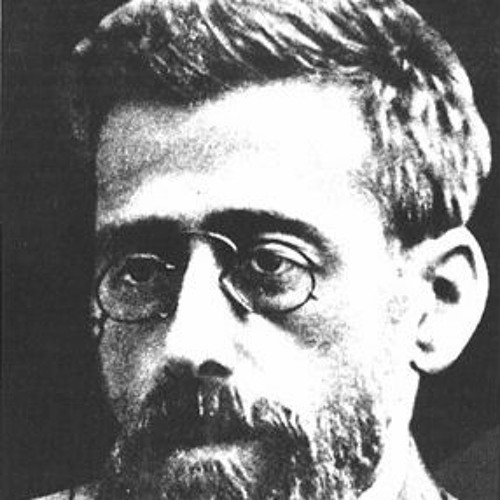
What I only recently discovered, however, is that there were a range of other contributions to this discussion – including from beyond Germany – in the pages of Die Neue Zeit. One such piece is the leading Menshevik Martov’s ‘The Discussions in Prussia and the Russian Experience’, in which he provides a critical overview of the 1905 revolution in Russia and sides with Kautsky against Luxemburg (who will soon cut all ties with Kautsky). While Lenin and the Bolsheviks generally agreed with Kautsky against Luxemburg, this piece is interesting insofar as Martov not only has Luxemburg in his sights, but also what he calls the ‘Blanquist and anarchist lack of culture’ that has been cultivated by the ‘best sons’ of the Russian proletariat: presumably, Lenin and the Bolsheviks.
Here is a brief summary of one of the introductory paragraphs to give readers a flavour of his approach. Would Patrons be interested in this as a possible text for translation and/or discussion? Let me know in the comments or on Discord.
Thanks again for all your support! Let’s get to 100 pounds! BL
‘The discussion between comrade Kautsky, on the one hand, and comrades R. Luxemburg and [Anton] Pannekoek, on the other, will hopefully have dispelled several illusions regarding the possibility of artificially speeding up the Junker regime’s inevitable process of destruction, the historical significance of which ranks alongside the demolition of Russian absolutism.
But this discussion has left intact the illusions that have arisen in Western-European socialist circles regarding recent events in Russia. When arguing against her, comrade Luxemburg’s opponents have allowed her to use the trump card of her argumentation – the Russian Revolution [of 1905] – to her sole benefit. When dealing with her references to Russia, these opponents content themselves with pointing out that conditions in Russia are quite particular’ to that country.