Hello all,
First of all, thanks so much for the continued support and welcome to all new Patrons!
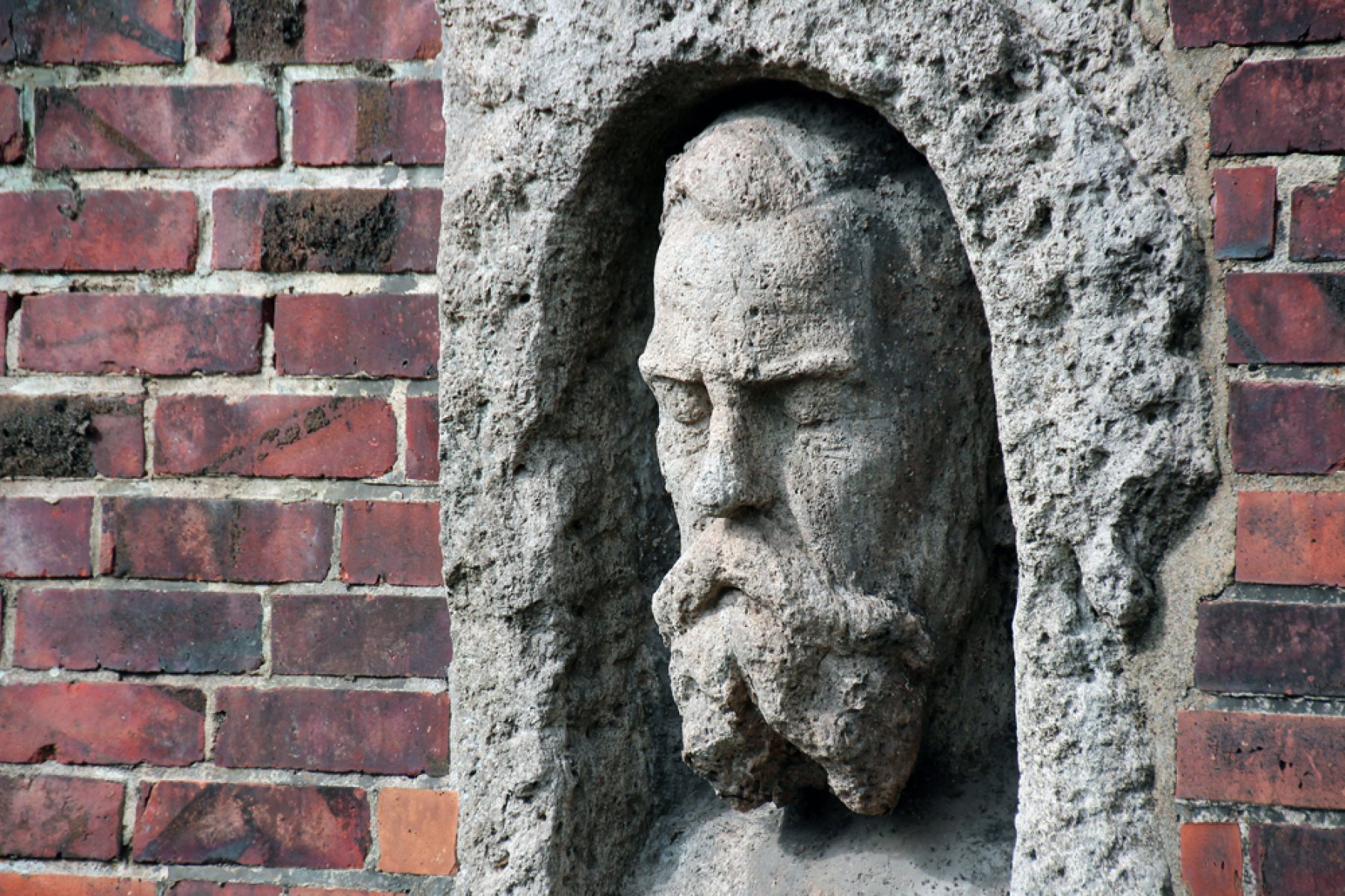
I currently have the pleasure of reading the most recent volumes of Rosa Luxemburg’s Gesammelte Werke. I will be translating some of the fascinating material in them for future volumes of her Collected Works in English and Patrons will, of course, be the first to see these texts. Reading through the volume, I came across this short eulogy for Ignaz ‘Nazi’ Auer that I thought – given our recent focus on Auer’s role in the development of German revisionism – would be of interest. The speech makes clear how, for all her many and pronounced differences with Auer, Luxemburg was nonetheless impressed by his dedication, personality and the role he played in German Social Democracy. Speaking on behalf of the Russian Social Democratic Labour Party (RSDLP), her description of the relationship between Russian Marxism and the German SPD as that of ‘the warm, personal relationship of a grateful pupil to an old beloved teacher’ is a most significant one that has certainly been lost on subsequent scholarly and far-left historical output.
BL
Rosa Luxemburg
Speech at the grave of Ignaz Auer (1846-1907) on behalf of the Russian Social Democratic Labour Party
According to a magazine report (Volksstimme [Magdeburg]).
No. 88, April 16, 1907.
Russian Social Democracy, the youngest member in the great family of the international proletariat, is dependent on the support of its older brothers and sisters in Western Europe, especially from German Social Democracy, both in theory and in the practice of creating important lessons from which to learn. Russian Social Democracy is therefore international, not only in its spirit, in its final goal, in its means of struggle, but it is, as it were, intertwined with the great international of the revolutionary proletariat.
Its relationship to German Social Democracy, in particular, is that of the warm, personal relationship of a grateful pupil to an old beloved teacher. For this reason, it is not only the great teachers of theory, but also the guideposts and banner-bearers of the practical struggles of German Social Democracy that are dear household names in Russia; familiar figures among the Russian proletarians.
Ignaz Auer is among the first ranks of these names. I can say, without any exaggeration, that although the great deceased man, in all his modesty, would have hardly suspected it, there is no corner of the Russian Empire where his name is not among those of the most beloved fighters of the revolution.
There was something else that was special about the striking figure of our deceased leader that caught the eyes of the Russian fighters and that endeared him to them. Ignaz Auer was and remained a genuine son of the people, a simple proletarian in modest clothing who distinguished himself through his brilliant talent and who, through the highest idealism and enormous energy, rose to become a great party leader and who, even when having reached the highest heights of the party, not only remained in the closest contact with the proletarian masses, but was directly a part of them. In the terrible struggles and sacrifices during the revolution, the Russian workers’ movement has not yet had the time to raise such sons from the midst of the people. But we are all aware that Russia’s liberation will only be possible when the proletarian masses will be able to provide not only death-defying, enthusiastic soldiers, but also commanders, strategists and leaders with the far-sightedness, depth, certainty, revolutionary energy and unbroken courage of Ignaz Auer. Only then will the cause of socialism and revolution in Russia be able to withstand every storm like a metallic cliff. That is why today at this grave, hundreds and thousands of fighters of the Russian revolution feel the deepest sorrow and the most profound love – whether they languish in the casemates [small enclosures in fortresses often used as prisons] of Petersburg, the mines of Siberia or in the torture chambers of the Baltic provinces. In all these places, they are aware that here a man has died whose life work is a shining example to be emulated: emulating and celebrating the example he has set must also be the goal of our life.